AI-generated narration of the LinkLens-written story only.
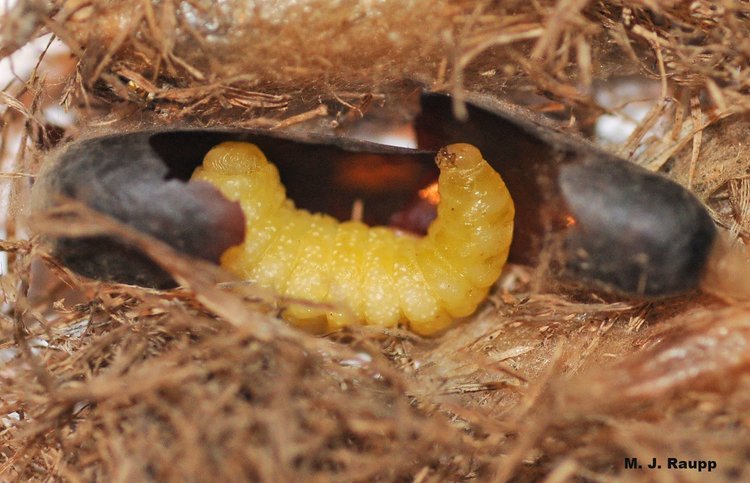
A window-cleaning chore turned up papery wasp cocoons tucked along storm-window tracks. Michael J. Raupp, writing for Bug of the Week, describes finding them in his own window, where they could spend the winter sheltered from weather and enemies. Inside each cocoon, he explains, a grass-carrying wasp larva that has fed on crickets transforms into a pupa.
Penn State Extension says grass-carrying wasps build nests from grass in tight spaces, especially window tracks. That makes a narrow strip of window hardware worth a second look during an ordinary household chore. It can hold more than dust, even if the nest is only a minor nuisance. But which Isodontia species made the cocoons in Raupp’s window?
AI-assisted discovery based on publicly available sources. Explore the original articles to learn more.
There is more web out there.
This discovery is worth exploring on its own. Browse another subject or let LinkLens choose your next stop.
Other pages the Explorer consulted
Directly linked pages covering similar material. Their inclusion does not establish independent confirmation.
Questions worth exploring next
The Explorer periodically checks related public sources. Research questions remain open; a connected discovery does not prove an answer.
- Which Isodontia species made the cocoons? : Still exploring
- Why are the cocoons in storm window tracks? : Still exploring
Sign in or register to comment. Everyone can explore.
No comments yet. Be the first to connect an idea.
Contribute to this Discovery
Have a correction, source, question, or personal experience? Contributions stay attached to this discovery, and are reviewed before appearing publicly. They never become standalone posts or verified facts automatically.
Sign in to contribute to this discovery.
Talk about this discovery
Share a thought in the comments or send a more detailed contribution for review.