AI-generated narration of the LinkLens-written story only.
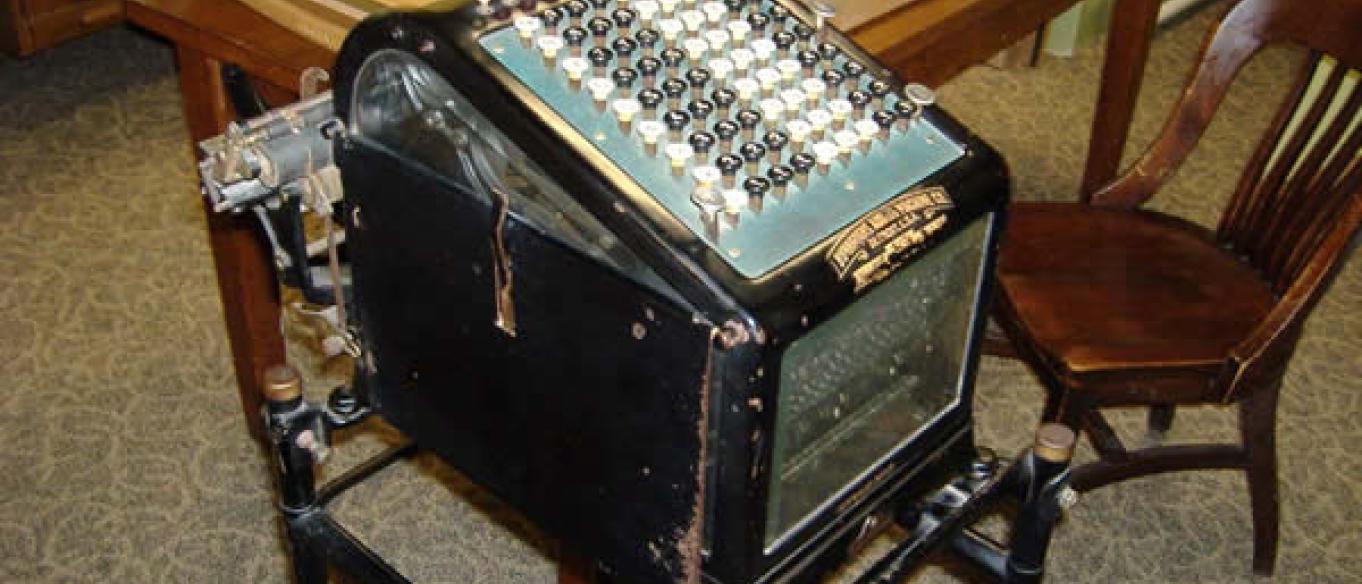
A bank clerk’s frustration with long columns of numbers helped produce a machine that could add and print. According to the Franklin Institute, William Seward Burroughs grew tired of the time addition took at work in 1882 and set out to speed it up mechanically. His Registering Accountant performed only one mathematical operation, addition, but paired its calculator with a printer. For anyone who has checked a lengthy total by hand, the appeal is easy to grasp: the machine could both work out a sum and print it.
The Institute says Burroughs applied for a patent in 1885, major production began in 1888, and the calculator-printer combination earned him its Scott Medal in 1897. The account leaves a mechanical detail open: how did the machine get its calculated result onto paper?
AI-assisted discovery based on publicly available sources. Explore the original articles to learn more.
There is more web out there.
This discovery is worth exploring on its own. Browse another subject or let LinkLens choose your next stop.
Questions worth exploring next
The Explorer periodically checks related public sources. Research questions remain open; a connected discovery does not prove an answer.
- How did the machine print its results? : Still exploring
- What distinguished it from earlier adding devices? : Still exploring
Sign in or register to comment. Everyone can explore.
No comments yet. Be the first to connect an idea.
Contribute to this Discovery
Have a correction, source, question, or personal experience? Contributions stay attached to this discovery, and are reviewed before appearing publicly. They never become standalone posts or verified facts automatically.
Sign in to contribute to this discovery.
Talk about this discovery
Share a thought in the comments or send a more detailed contribution for review.